
Estimated reading time: 4 minutes
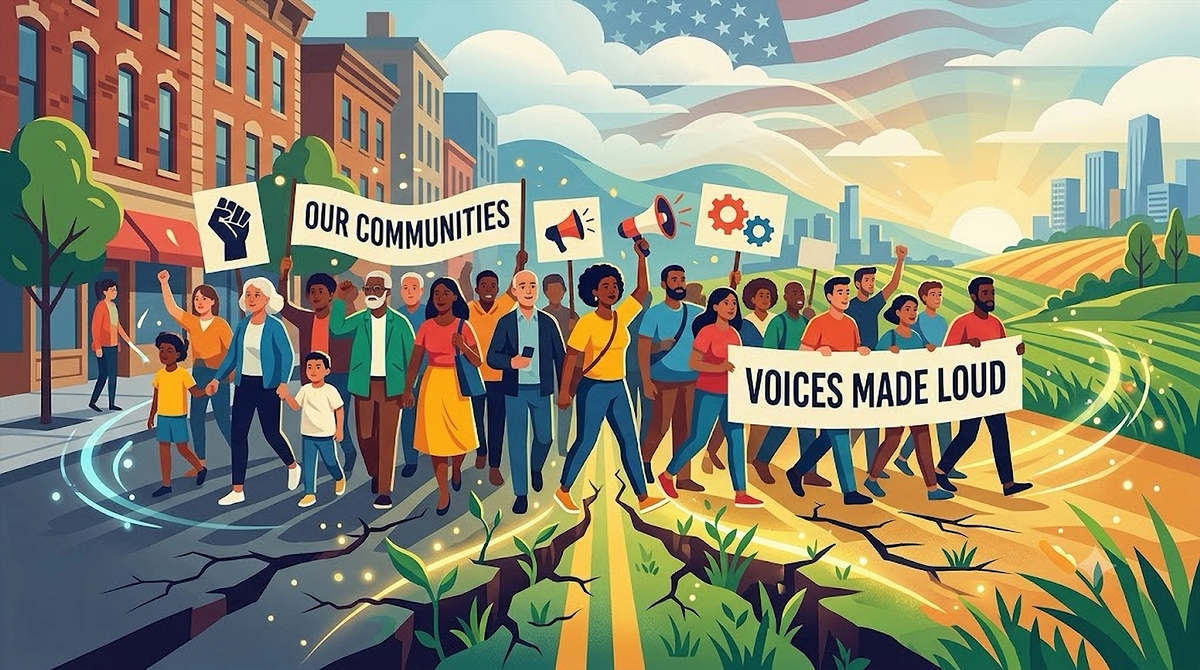
The story of American democracy isn’t written in the halls of Congress or the chambers of the Supreme Court. Its most defining chapters are written on street corners, in church basements, and at kitchen tables. This is the realm of the grassroots movement, the collective power of ordinary people, like you and me, who refuse to accept that the status quo is unchangeable. At its core, analyzing grassroots movements impact reveals a bottom-up phenomenon driven by community-led, collective action rather than top-down political edicts. It’s the purest expression of civic engagement, where the agenda is set by the people, for the people.
Historically, these movements have served as America’s essential course-correctors. When the institutional machinery of government stalls or turns blind eyes to injustice, the grassroots ignite. Consider the Abolitionist movement, which relentlessly chipped away at the moral catastrophe of slavery long before the Emancipation Proclamation. Decades later, the Women’s Suffrage movement fundamentally re-engineered the American electorate through decades of relentless local organizing. And perhaps most trans formatively, the Civil Rights Movement of the mid-20th century utilized local boycotts, marches, and voting drives to shatter the legal apparatus of Jim Crow. These were not top-down initiatives; they were massive groundswells built from the steady momentum of countless individual actions.
Shifting Policy from the Ground-Up
The true measure of a grassroots movement’s power lies in its ability to translate raw civic passion into binding policy. While traditional political approaches rely on big-dollar lobbying, backroom negotiations, and party discipline, grassroots efforts alter the political climate. They force representatives to listen by shifting public opinion and altering the political equation. When a community mobilizes, local city councils pass ordinances, state legislatures rewrite statutes, and eventually, the federal government is forced to act.
When tracking grassroots movements impact, we see this influence clearly in major legislative milestones. The labor movements of the late 19th and early 20th centuries directly forced the creation of the weekend, child labor laws, and workplace safety standards. In recent history, the marriage equality movement flipped public consensus and state laws with astonishing speed, culminating in nationwide legalization. By the time a bill is signed into law, the grassroots have usually spent years laying the cultural and political groundwork to make that law possible.
The Structural Hurdles of Bottom-Up Organizing
The path of bottom-up organizing is fraught with structural hurdles. Unlike well-funded corporate political action committees (PACs), grassroots movements almost always operate on shoestring budgets, relying on volunteer labor and small dollar donations. This financial lopsidedness makes sustaining a long-term campaign incredibly difficult. Furthermore, establishing a fair narrative is a constant battle; local news broadcasts frequently give minimal coverage to ongoing community organizing, while mainstream media representation often reduces complex, nuanced systemic critiques into fleeting, sensationalized soundbites, or ignores the movement entirely until a crisis erupts.
Beyond funding and media, the most formidable obstacle is entrenched political opposition. Entrenched power structures rarely concede ground voluntarily. Historically, movements have faced aggressive counter-mobilization, state surveillance, and legislative maneuvers designed to criminalize or dilute the right to protest. To survive, successful movements have had to pivot from disruptive activism to structured organizational building, developing sophisticated communication strategies, forming tactical coalitions, and training local leaders to ensure enthusiasm doesn’t burn out before achieving its goals.
The Future of Grassroots Movements
As we look toward the future of American democracy, the nature of grassroots mobilization is undergoing a radical evolution. The digital age has democratized the tools of organization. Today, a global movement can be sparked by a single hashtag, and millions of dollars can be raised overnight through decentralized crowdfunding. Technology has obliterated the geographic barriers to civic engagement, allowing disparate communities to unite under a shared banner instantly.
However, speed does not inherently equal sustainability. The future effectiveness of grassroots efforts will depend on their ability to bridge the gap between digital awareness and deep, local organizing. While social media can mobilize a crowd for a weekend protest, it takes sustained, real-world community building to alter the trajectory of local elections and secure long-term policy shifts. In an era marked by deep political polarization and anxiety over democratic backsliding, understanding grassroots movements impact reminds us that community organizing remains what it has always been: the ultimate safeguard of a government truly accountable to its people