
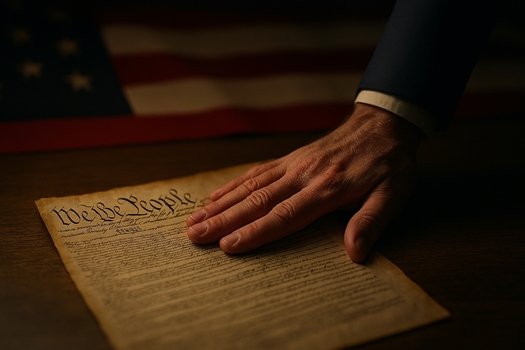
In a constitutional republic, power is legitimate only when it is constrained. Whether in the hands of a president, a political party, a judge, or a soldier, authority derives its meaning from the oath to uphold the Constitution — not from personal ambition or partisan loyalty. When leaders demand obedience instead of accountability, when rights are treated as privileges to be granted or revoked, the entire system begins to warp. This hub examines the many fronts on which constitutional duty is tested: the military’s ethical boundaries, the presidency’s obligations, the justice system’s independence, and the citizen’s own responsibility to defend the rule of law.
Cornerstone Essays

The Constitution Comes First, Not Trump
Veterans reminded troops that their oath is to the Constitution, not to any one leader — and Trump’s furious response exposed just how fragile that principle has become. Affirming the rule of law shouldn’t be treated as defiance.

Donald Trump and the Presidential Oath of Office
A president who shrugs at his oath undermines the very Constitution that grants him power. The oath isn’t symbolic — it’s the foundation of legitimate leadership.

A new doctrine is telling officers to retire rather than refuse an unlawful order — a quiet abandonment of the duty to speak up. When silence becomes the safest path, integrity erodes, and the military’s loyalty to the Constitution is put at risk.
All Posts
- Silence Is Not Honor
- The Constitution Comes First, Not Trump
- Donald Trump and the Presidential Oath of Office
- My Constitution, My Rights — Hands Off Our Civil Liberties
- We the People: Our Rights Are Not Theirs to Take
- With Power Comes Responsibility
- Republican Party: Loyalty Over Country
- Trump’s Unauthorized Strike
- Federal Justice Under Trump
- A Hard Christmas and the Courage We Need Next