
It started how these things often do: an early morning post on Truth Social. Trump announced that Nicolás Maduro was gone, seized and flown out of Venezuela. The timing was pure theater, but what he said later that day was deadly serious. At a Saturday press conference, Trump declared that the United States would now be helping to run Venezuela – indefinitely.
That one word, “indefinitely”, should send a chill down every American’s spine.
Trump tried to sell the takeover as a “safe, proper and judicious transition.” But listen to what he was actually saying. He wasn’t talking about a transition to a real democracy. He was describing a puppet government, designed to install a leader who would do whatever he wanted. A government shaped not by the Venezuelan people, but by Trump’s own priorities.
And then he gave the game away.
He couldn’t stop talking about oil.
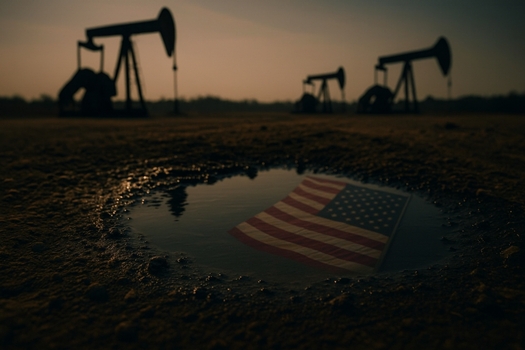
“We’re going to have our very large United States oil companies… go in, spend billions of dollars, fix the badly broken infrastructure… and start making money for the country,” he said. He didn’t stop there, either. He said the U.S. would run Venezuela’s oil production and sell it on the world market to “cover the cost of running the government.” He even boasted he was going to get back “the oil, land, and other assets that they previously stole from us.”
That isn’t the language of liberation. That’s the language of a smash-and-grab.
From the very beginning, the administration sold this whole operation as a fight against narco-terrorism, spinning a dramatic tale of drug kingpins and threats to our homeland. But it was never a story that held up. Venezuela isn’t a major source of cocaine, heroin, or fentanyl. The cocaine comes from Colombia, Peru, and Bolivia. The opioids are overwhelmingly tied to Mexico. If Trump was serious about stopping the drug trade, those are the countries he’d be focused on.
This is why, as I’ve been arguing since last December, the drug narrative was always a smoke screen. The real prize was always Venezuela’s oil.
And what a prize it is.

The U.S. might be the world’s biggest oil producer, but we mostly have light, sweet crude. That’s great for gasoline, but it’s not what you need for the heavy-duty products that keep the global economy moving. Venezuela’s oil is the heavy, sour stuff – the kind you need to make diesel, asphalt, and fuel for factories and ships. Diesel is in short supply everywhere. Many of our own refineries were literally built to process Venezuelan crude; they run better on it than they do on our own. It’s cheap, it’s plentiful, and it’s right next door.
It was, in other words, strategically irresistible.
But here’s the part Trump didn’t mention in his press conference – the part we’ll all be living with long after the headlines have moved on.
If the United States is now “running” Venezuela, that means American troops on the ground. Indefinitely. There’s no other way. You can’t run another country’s government, secure its oil fields, and control its security without a military occupation. And over time, the Venezuelan people won’t see us as saviors. They’ll see us as occupiers.
We’ve seen this movie before. We know how it ends.
So yes, Trump may have gotten what he wanted: control over Venezuela’s massive oil reserves. But he’s done it at a cost that won’t be paid by oil executives or White House strategists. It will be paid by the American people-in our tax dollars, in the deployments of Americans, and in the slow, grinding consequences of occupying a sovereign nation.
The administration can spin this as a heroic intervention all they want. But the truth is much simpler, and much uglier: this is a war for resources, dressed up in the language of national security. And the longer we pretend it’s anything else, the more we accept a foreign policy built not on democratic ideals, but on whatever we can take at the point of a gun.