
Estimated reading time: 3 minutes
In my previous piece, I argued that ABC’s unprecedented on-air ad campaigns, explicitly asking viewers to support the network against political pressure, are a profound wake-up call. For corporate media to break the fourth wall and plead for public backing, the threat can’t merely be verbal. It’s a direct result of unprecedented regulatory overreach against the media.
To understand why a media giant like Disney’s ABC is turning to its audience for defense, we have to look past the standard theater of presidential social media attacks and late-night bickering. We need to look at the quiet, administrative warfare being waged by the Trump administration through Washington’s regulatory apparatus.
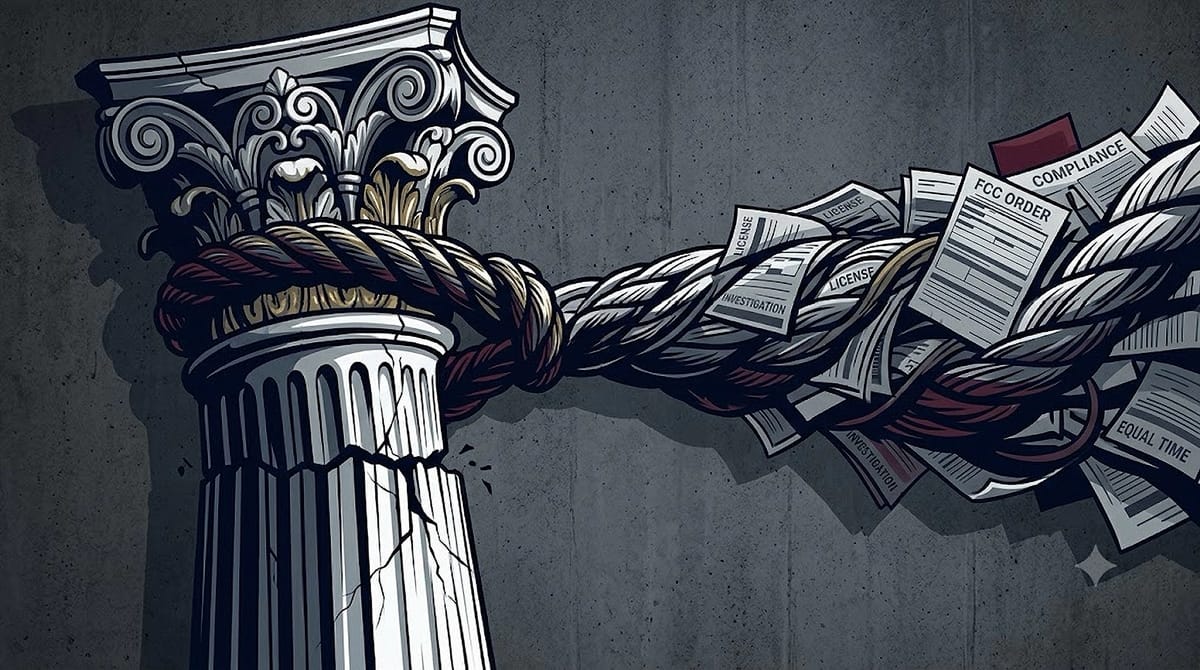
Dictatorships of the past shut down critical press with tanks and midnight raids. Modern, democratic backsliding happens much more subtly: through paperwork, bureaucratic delays, and targeted regulatory penalties. It’s happening right now under FCC Chairman Brendan Carr.
Unprecedented FCC License Renewal Abuse
The most alarming escalation is the FCC’s recent order forcing ABC to apply for early license renewals across its eight owned-and-operated local stations. To the average American, this sounds like a trivial administrative chore. To media lawyers, it’s a seismic threat. This highly punitive maneuver hasn’t been deployed against a major broadcaster in over 50 years. By threatening a network’s local broadcast licenses, Trump is targeting its actual right to exist on the airwaves, creating an existential and financial bottleneck.
Simultaneously, we’re seeing the weaponization of the federal government’s “equal-time” rule. The FCC has opened investigations into daytime talk shows like The View, forcing ABC into a defensive posture where they must formally petition to reclassify entertainment and interview programs as “news” to protect them from regulatory overreach. Combined with Trump’s recent threats of multi-million dollar lawsuits over petty grievances, such as ABC’s investigative reporting on the costs and algae problems plaguing the Lincoln Memorial Reflecting Pool, the strategy becomes clear. It’s a death by a thousand legal cuts.
How Administrative Pressure Triggers Corporate Self-Censorship
The danger of this approach is that it targets corporate anxiety. Major networks aren’t just journalistic entities; they’re massive commercial enterprises answerable to boards of directors and shareholders. When the federal government makes it legally and financially exhausting to report the news, it invites corporate self-censorship.
Tragically, this pressure tactic works. We have already watched other major networks quietly bow to executive pressure, pulling punches and adjusting coverage to avoid bureaucratic retribution. They operate under the delusion that compliance will buy them safety.
But ABC’s aggressive defense, both in its rigorous filings to the FCC and its public ad campaigns, exposes the flaw in that surrender. If Trump successfully uses independent regulatory bodies to choke out one network for critical coverage, every other media board in America will get the message. Timidity will become the industry standard.
The battle ABC is fighting isn’t about a single network, a single daytime show, or a single report on a public landmark. It’s about whether the administrative state can be converted into a political weapon to bypass the First Amendment. If we allow bureaucracy to replace the Constitution, the free press will not end with a bang, but with the quiet signing of a regulatory order.